Tucson Water: hard to very hard blend of groundwater and Colorado River water. Chlorine residual about 1 ppm. No LACSD-style ban found. Do not invent a single grains number.
No district prohibition found in current research. No Tucson or Pima County sanitation prohibition comparable to LACSD Measure S turned up. Still ask the agency on the sewer bill. Private wells and isolated Tucson Water systems are not the Main System CCR.
Hardness (as published)
Tucson Water classifies the groundwater + Colorado River blend as hard to very hard and says hardness is not a health risk in that description. This file does not invent a single gpg from a third-party scraper. Use the neighborhood dashboard or a titration. — Tucson Water Water Quality page; Tucson Water parameter explanation table; 2024 Main System CCR
Disinfectant (as published)
Chlorine. 2024 Main System CCR: chlorine residual about 1.0 ppm (0.96–1.14). Target band described as 0.80–1.2 mg/L. — Tucson Water 2024 Annual Water Quality Report — Main System AZ0410112
What actually fits
Some links are affiliate links. If you buy through one, we may earn a commission. That does not change the match, and it is not a medical claim.
As an Amazon Associate we earn from qualifying purchases.
If soap will not lather and the glassware looks chalky
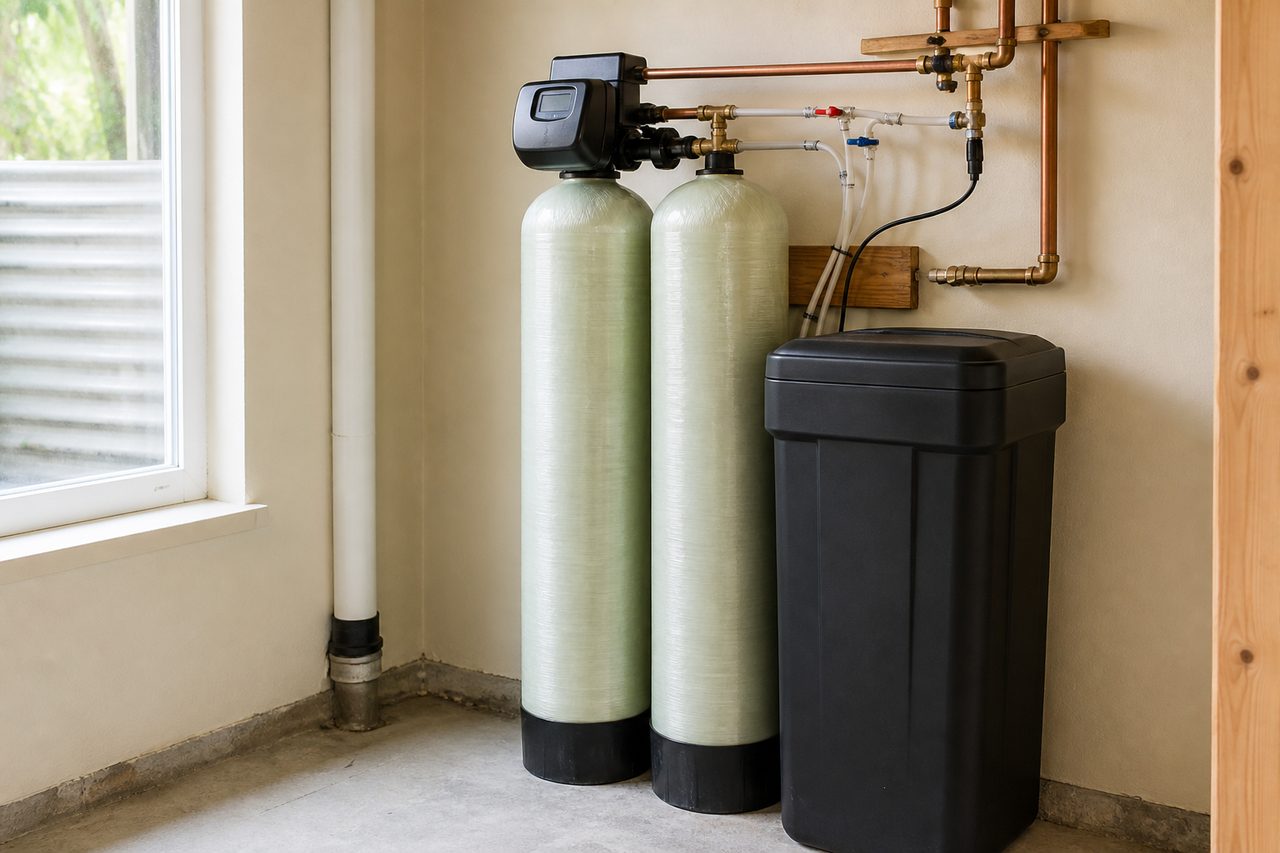
Salt-based softener: two mineral tanks and a brine tank.
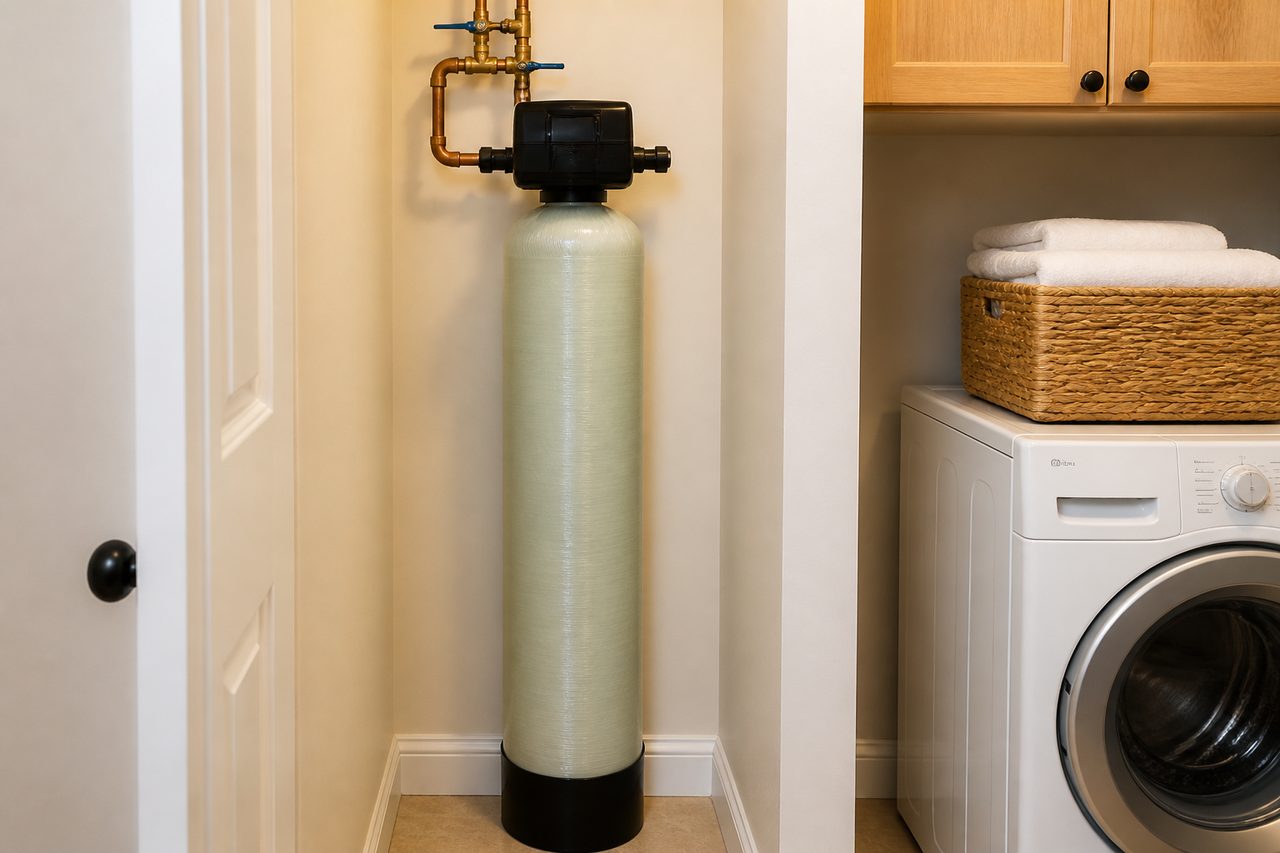
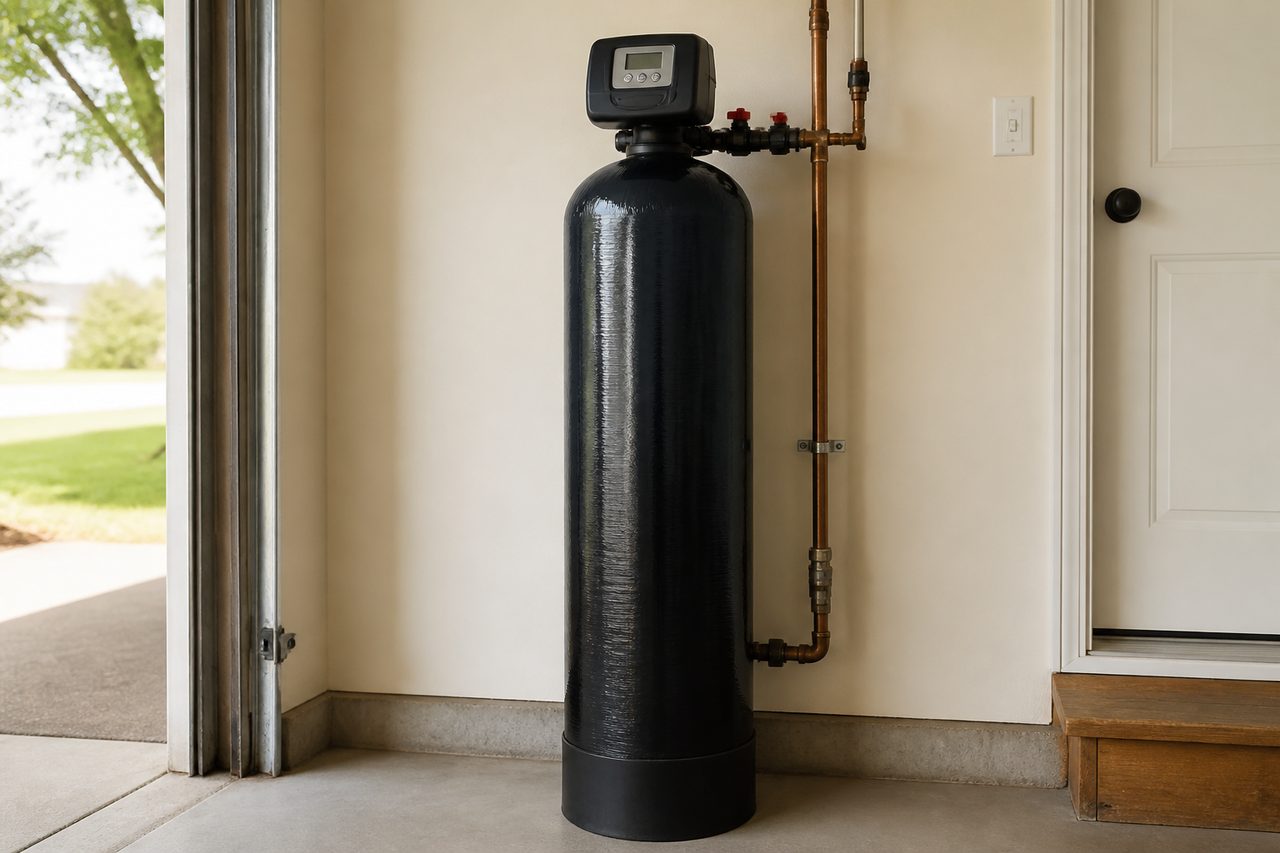
A salt-based softener is the thing that actually removes hardness. Size it from your grains and how much water you use, not bathroom count. It needs a drain.
If you are shopping a PFAS listing for the kitchen
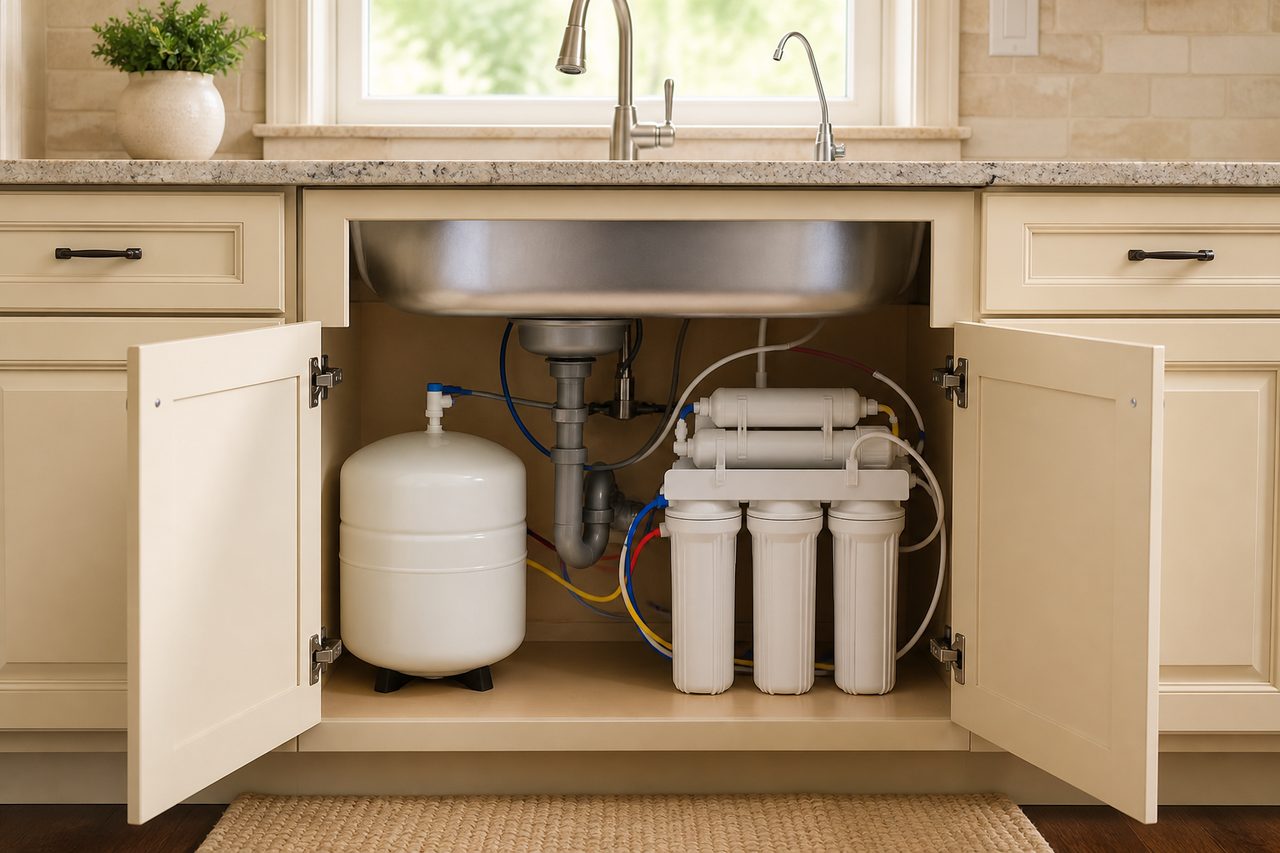
Under-sink reverse osmosis: filters, tank, and a second faucet.
A pitcher or under-sink RO whose exact model is listed for PFAS under NSF/ANSI 53 or 58. The RO shop link is Waterdrop. Pitchers stay on a tagged Amazon search. We have not picked a model.
Tucson is a hard-blend / chlorine file. CAP water plus wells. Isolated systems (Corona de Tucson and the rest) have their own CCRs.
What Tucson Water publishes
The utility says hardness comes from local groundwater and Colorado River water, that it tends to be hard, and that this is not a health contaminant in their description. Their parameter sheet uses the USGS hard / very hard bands. We are not printing a dealer-site 12.9 gpg as if it were the 2024 CCR’s citywide number.
Chlorination is explicit: about 1 ppm residual on the 2024 Main System report.
Salt discharge
unrestricted-as-of-research. Arizona is not “banned in California.”