No district prohibition found in current research. No Tampa or Hillsborough sewer prohibition comparable to LACSD Measure S turned up. Ask the wastewater utility before you cut a brine line.
Hardness (as published)
2025 finished-water average total hardness 211 mg/L / 12.3 grains per gallon (city Q&A in the 2025 Water Quality Report). — City of Tampa 2025 Water Quality Report (published 2026)
Disinfectant (as published)
Secondary disinfection: chlorine, then ammonia to form chloramine. City also switches to chlorine-only for three-week intervals several times a year. — City of Tampa 2025 Water Quality Report; Tampa chlorine disinfection / water system maintenance page
What actually fits
Some links are affiliate links. If you buy through one, we may earn a commission. That does not change the match, and it is not a medical claim.
As an Amazon Associate we earn from qualifying purchases.
If soap will not lather and the glassware looks chalky
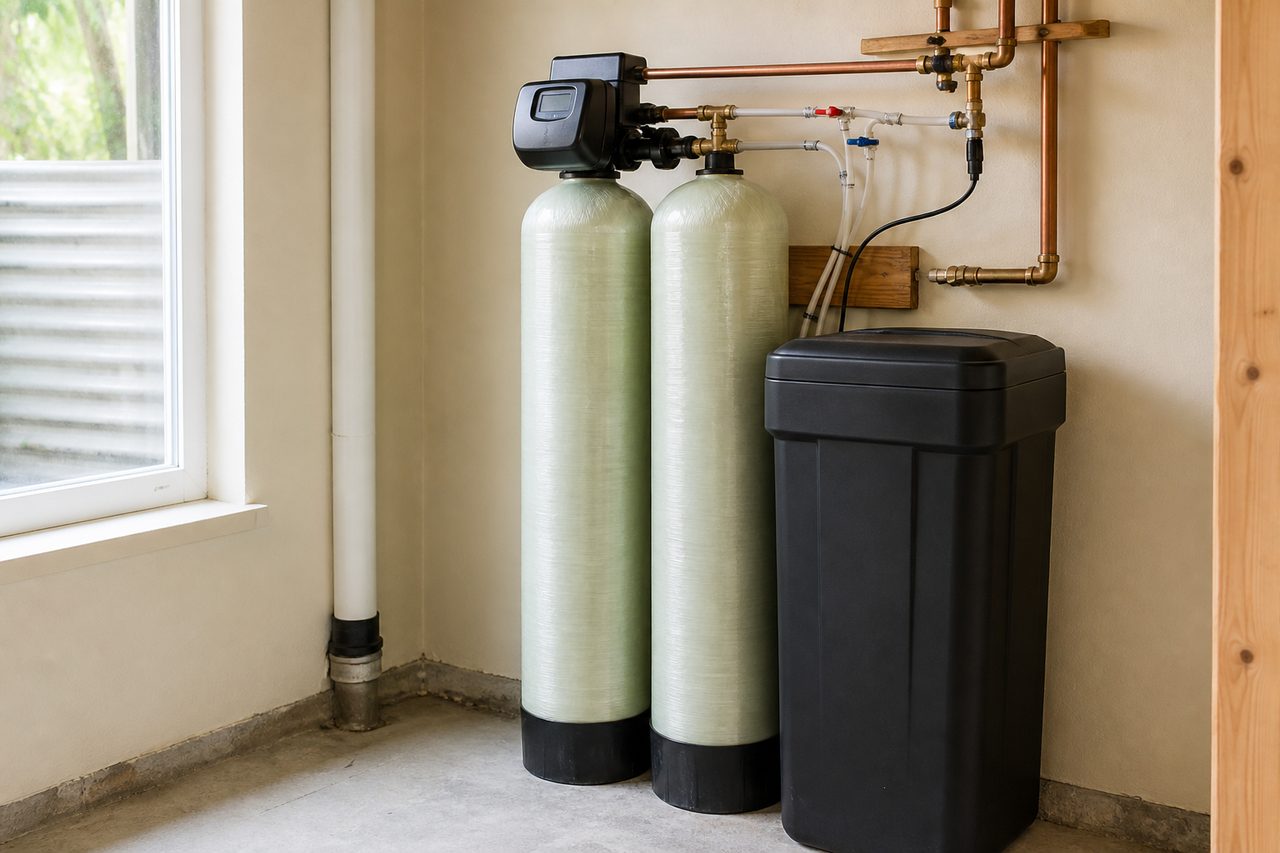
Salt-based softener: two mineral tanks and a brine tank.
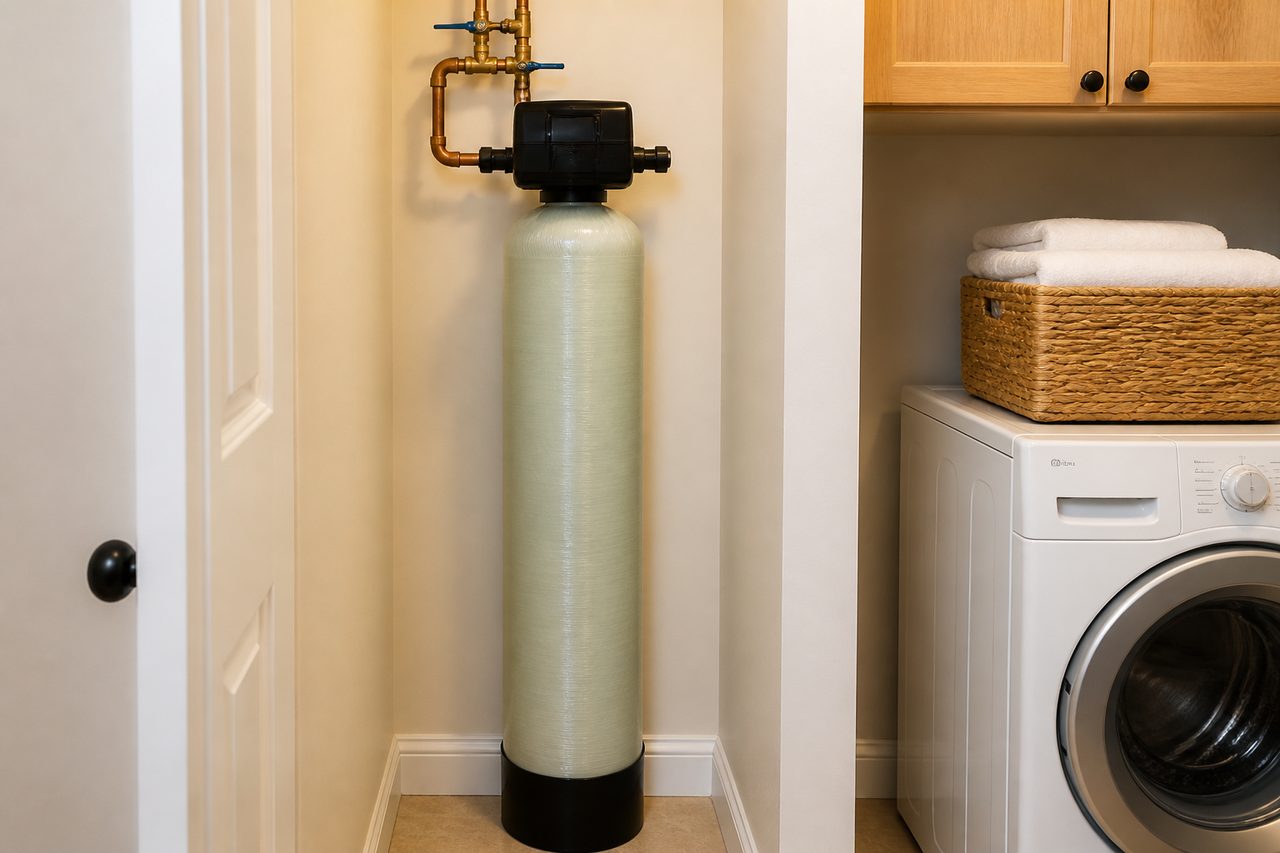
A salt-based softener is the thing that actually removes hardness. Size it from your grains and how much water you use, not bathroom count. It needs a drain.
If you are shopping a PFAS listing for the kitchen
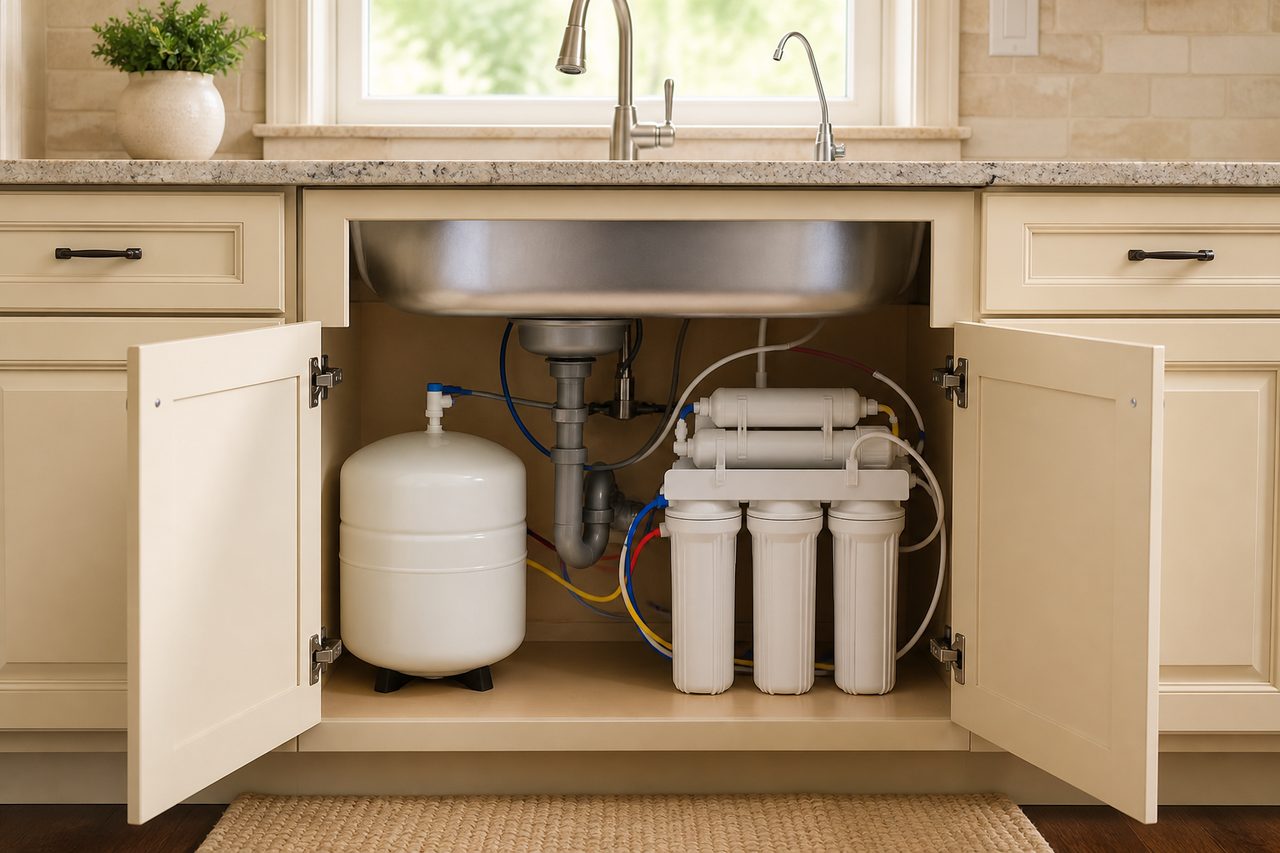
Under-sink reverse osmosis: filters, tank, and a second faucet.
A pitcher or under-sink RO whose exact model is listed for PFAS under NSF/ANSI 53 or 58. The RO shop link is Waterdrop. Pitchers stay on a tagged Amazon search. We have not picked a model.
Tampa is a hard, chloramine file with a published chlorine-burn calendar.
What the 2025 report prints
Average finished-water hardness 211 mg/L / 12.3 gpg. pH averaged 7.88. Treatment includes ozone, then chlorine plus ammonia for the residual.
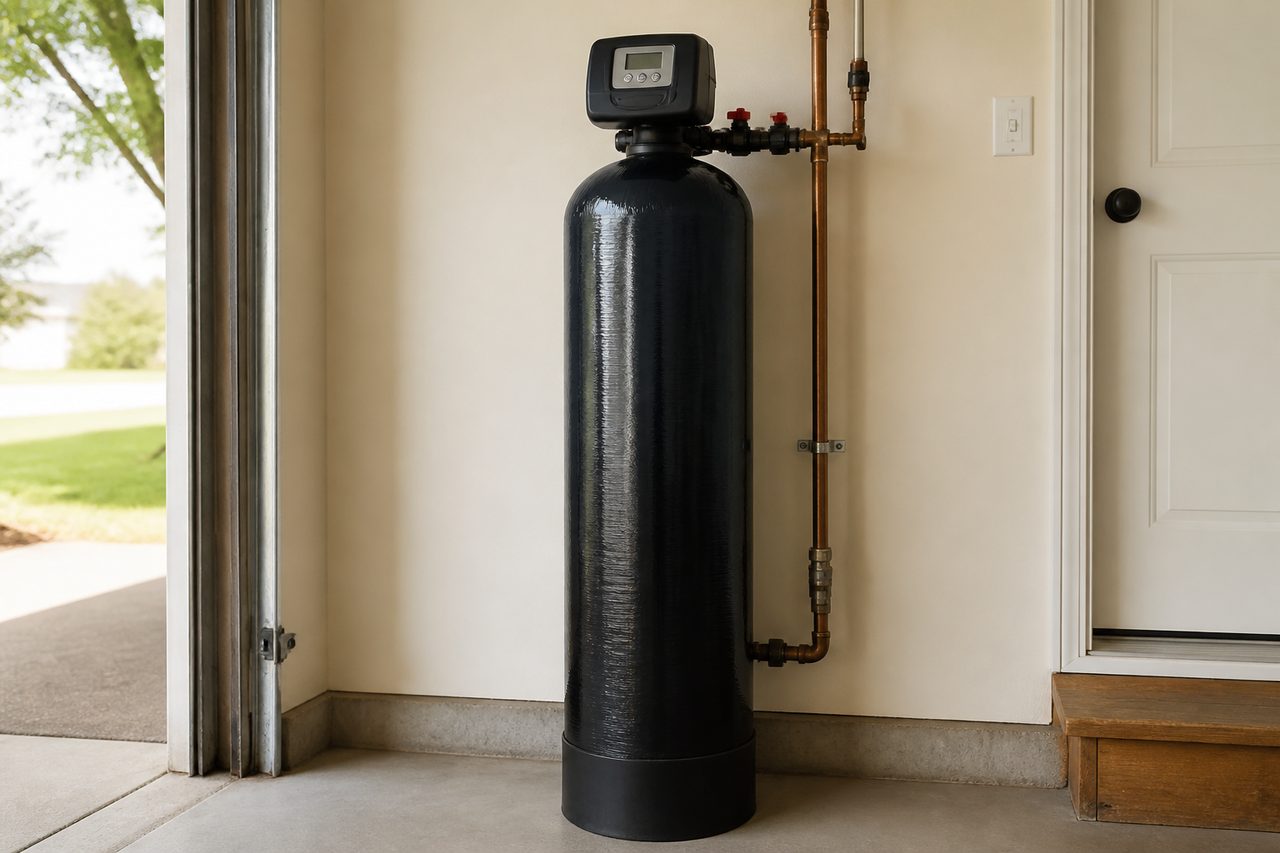
The city says it switches to chlorine-only for three weeks at a time, usually winter and summer, and that some people notice the smell. A carbon bed has to handle both residuals.
Salt discharge
unrestricted-as-of-research.
What to match here
Hardness: salt softener if the sewer allows it; read the quote.